
Studio notes
How to Spot Crypto Scams and Fake Signal Sellers: A Plain-English Guide for Everyone
Guaranteed profits, VIP channels, fake trading apps, "withdrawal fees": learn 10 warning signs and simple checks to spot a crypto scam before you lose money.
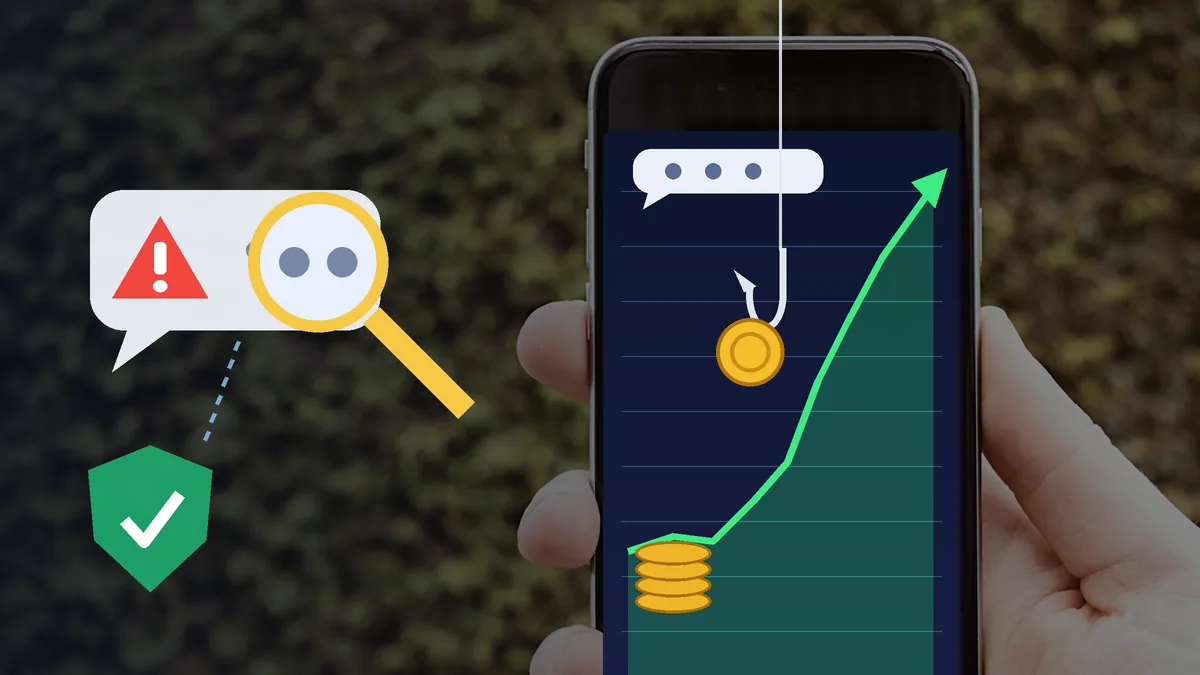
Picture a short, tempting message: "Start with just $100 and earn a guaranteed 3% a day. Our VIP members doubled their money this month." Underneath are a few screenshots of accounts glowing with green numbers, and a stream of thank-you notes.
If something like that has landed in your Telegram, Instagram or WhatsApp, you are not alone. This guide is for anyone who has never traded but would like to know which offers are real and which are traps. You don't need any technical background or any crypto of your own. Whenever a term comes up, we explain it in plain words.
How serious is the problem?
To get a realistic sense of scale, let's look at two credible sources.
In its 2025 annual report, the FBI's Internet Crime Complaint Center (IC3) says complaints it received that year involving cryptocurrency reported about $11.4 billion in losses. The largest share, about $7.2 billion, came from cryptocurrency investment fraud. The same report records about $1.4 billion lost to "recovery scams", where people who had already been cheated once were cheated again by someone promising to get their money back.
These figures come only from complaints filed in the United States, and not every victim files one. Blockchain analytics firm Chainalysis estimates that at least $14 billion in crypto reached scammers' wallets worldwide in 2025, and that the figure could pass $17 billion as more wallets are identified. According to the same firm, scams in which the fraudster poses as a well-known company, investment adviser or government official grew by more than 1,400% in a single year.
The message behind these numbers is simple: this is not the work of a few lone tricksters. The FBI says many of these schemes are run by organised criminal groups. They come with a team, a script and plenty of patience. If they sometimes sound convincing, it isn't because you are naive. Convincing people is their job.
Seven common faces of crypto fraud
Names and looks change, but most scams fit one of these patterns.
1. The "guaranteed profit" signal seller
A "signal" is a tip such as "buy this coin now and sell at this price". Genuine signal services do exist, but no honest person can guarantee a profit. Nobody knows exactly what the market will do tomorrow.
Common signs of a fake signal seller:
- Promises of a fixed daily, weekly or monthly return.
- Screenshots of big wins, with no complete, checkable record of losses.
- A free channel that keeps pushing you towards a paid "VIP channel".
- Losing signals quietly deleted.
- Pressure to act fast: "Only a few spots left until tonight."
- A group full of "happy members" praising their profits. The FBI and the FTC warn that in groups like these, many members are scammers themselves or the testimonials are fake.
2. The fake trading website or app
This is one of the most dangerous variants. The FBI describes the process roughly like this: you are asked to sign up on a website or app and deposit money. Your account shows impressive gains, and you may even be offered a "loan" to invest more. But when you try to withdraw, suddenly there is talk of "taxes" and "release fees". Once that last payment is made, they disappear.
The key point is that the numbers on that site are just numbers on a screen. There may be no real trading behind them at all. Sometimes they let you withdraw a small amount first, to win your trust so you deposit more next time.
3. The online friend who turns into an investment coach
It often starts with an innocent message, such as "Sorry, I think I texted the wrong number." The conversation warms up and goes on for weeks. The other person is kind, seems successful, and gradually starts talking about profits from a "special platform". This is known as "pig butchering": the victim is first "fattened up" with attention and trust, and then their money is taken.
The FBI says scammers usually make contact through text messages, social media, ads or dating apps and quickly move the conversation to another messaging app such as WhatsApp or Telegram. One of the common openers it lists is exactly this: a text that pretends to have reached the wrong number.
4. "Pump and dump" groups
Here, the organisers of a large group first buy a cheap, little-known coin themselves. Then they tell members, "Buy now, it's about to multiply." As members rush in, the price rises (the pump) and the organisers sell at the peak (the dump). The price collapses and most members are left with losses.
If a group keeps saying "this unknown coin is about to go 10x", ask yourself why they would share such a valuable secret for free with thousands of people.
5. Impersonation: exchange support, trusted brokers, celebrities
The US Securities and Exchange Commission (SEC) warns that fraudsters set up social media accounts that mimic brokers, advisers or trusted market sources, sometimes with a single letter changed in the username. The same alert notes that fraudsters sometimes pay actors or influencers to promote an investment.
Today, AI has joined the game. A celebrity's face and voice can be faked to produce a video in which, say, a famous billionaire praises a "new platform". Chainalysis reports that scams with on-chain links to AI tool vendors brought in, on average, about 4.5 times more money per operation.
Remember one golden rule: no genuine exchange support team will ever ask for your wallet's recovery phrase (the 12 or 24 words that are the key to your assets), your password or your SMS code. Anyone who asks for these is a scammer.
6. The magic trading bot
A trading bot is software that buys and sells automatically according to a set of rules. It can be a useful tool, but it doesn't perform miracles. In an advisory about trading bots and signal schemes, the US Commodity Futures Trading Commission (CFTC) describes a case in which one man, promising at least 10% a month from a "proprietary bot", took more than $1.7 billion in bitcoin from at least 23,000 people. According to the CFTC, very little money was actually traded, some account balances were fake, and new investors' money was used to pay earlier ones.
The same CFTC advisory says not to believe claims of "100% winning trades" or returns of thousands of percent. As the agency puts it, this technology cannot predict the future or sudden market changes.
7. The recovery scam
This is the cruellest variant, because it targets people who have just been hurt. A person or "firm" appears, claiming it can trace and return the lost money, as long as you pay a "fee" first. The FBI warns that some of them pose as law firms or as partners of government agencies, even cite agencies that don't exist, and know the exact details of the victim's earlier payments to seem credible.
A checklist of 10 warning signs
If you see even one of these, stop:
- Guaranteed or fixed returns. In real markets, profit always comes with risk.
- Urgency and pressure. "Today only", "limited spots", "you'll miss out".
- Payment only in crypto or gift cards, to a wallet the person gives you.
- Big profits on screen, but withdrawals are hard; for example, they demand "taxes" or "fees" to release your money.
- A new online acquaintance who quickly brings up money and investing.
- Requests for your recovery phrase, password, verification code, or to install a remote-control app on your phone or computer.
- Only wins on display, with no complete, checkable record that shows losses too.
- Recruitment rewards. The more people you bring in, the bigger your bonus.
- A brand-new website, or an address that looks like a famous brand with a letter or two changed.
- A celebrity suddenly promoting an unknown platform, especially in a video that only circulates on social media.
A hypothetical example: from a "wrong number" to a "withdrawal fee"
This scenario is invented and Maryam is a fictional character, but each step is drawn from patterns the FBI and the FTC describe in their warnings.
Imagine Maryam, an office worker, gets a message from an unknown number: "Hi Mr Rezaei, is tomorrow's meeting still on?" She replies that they have the wrong number. The sender apologises and the chat continues. A few weeks later, this "new friend" mentions profits from a trading app and suggests Maryam try it with a small amount.
Maryam deposits $200 and, a few days later, withdraws $50 in profit. Her trust grows and she deposits more. The balance on screen climbs to several thousand dollars. When she tries to withdraw it all, a message says she must first pay a 15% "tax".
Several warning signs appear one after another in this story: a chance acquaintance, investment talk once trust is built, a small withdrawal to build confidence, and finally a "release fee". The right moment to stop was the moment an online stranger brought up an investment app.
Before you send anyone money, do these five things
- Verify identity independently. Don't open a website or support number from a link the person sent you. Search for it yourself or use the official app. The CFTC suggests running a reverse image search on key people to check that their photos haven't been lifted from somewhere else.
- Check the website's age. According to the CFTC, the lookup.icann.org service shows when a domain was registered. A platform that claims years of history but whose domain was registered a few months ago deserves questions.
- Get a second opinion. Talk to a trusted friend, a family member or a financial adviser. Scammers sometimes ask you to keep things secret. That request alone is a red flag.
- Do the maths on costs. Fees, the gap between buy and sell prices, and monthly subscriptions all eat into returns. The CFTC also advises considering their impact.
- Never start with money you can't afford to lose. Even in real markets with the right tools, losses are part of the game.
If you think you've been scammed
- Stop paying right now. Don't pay any more "taxes" or "release fees". The FBI is clear that paying the scammers will not get your money back; every new payment only adds to your loss.
- Keep everything: messages, wallet addresses, transaction receipts, usernames and website addresses.
- Change your passwords, remove any remote-control app you installed, and turn on two-factor authentication.
- Tell the exchange or bank you sent money through. Acting quickly can sometimes improve the chance of follow-up.
- Report it to the police or the cybercrime authority in your country. In the United States, the FBI takes reports at ic3.gov.
- Beware of "rescuers". Anyone who contacts you out of the blue and promises to recover your money for an upfront fee is most likely running part two of the same scam.
One more important point: don't be ashamed. These groups are professionals, and they fool educated, experienced people too. Talking about what happened might stop someone else from losing money.
What does an honest analyst or tool look like?
To complete the picture, here is what legitimate work in this field usually looks like:
- It talks about risk and the chance of loss as much as about profit.
- It shows a complete record, including losing trades.
- It never guarantees a fixed number.
- It doesn't ask you to send money to its own personal account or wallet. Your assets stay in your own account with a reputable exchange or broker.
- If it sells a bot or software, it explains exactly what the tool does and what it can't do.
If you'd like to learn more about how a well-built trading bot works and why so many bots fail on a live account, you can also read "Why live trading bots fail after a perfect backtest" and "Risk Management and Position Sizing: Know What You Can Lose Before You Enter a Trade" in the Behvandi articles section.
Final word
Keep one sentence in mind: any offer that promises big, risk-free profits is hiding something from you. Don't rush; ask questions and check. The money you patiently protect today will still be there for real opportunities tomorrow.
At Behvandi, our work is financial markets, trading bots, AI and software development. If you have a question, want a second opinion on a tool you're unsure about, or are looking to build a trading system or software you can trust, we'd be glad to hear from you through the "Contact us" page on the Behvandi website.
This article is for educational purposes only and is not financial or investment advice. Figures reflect the latest published reports as of November 24, 2026.
Sources
- FBI Internet Crime Complaint Center (IC3): 2025 Internet Crime Report
- FBI PSA: Fictitious law firms targeting cryptocurrency scam victims while offering to recover funds
- FBI: Cryptocurrency investment fraud
- Chainalysis 2026 Crypto Crime Report: Scams
- CFTC customer advisory on trading bots and signal schemes
- SEC Investor Alert: Social media and investment fraud
- FTC data on scams that start on social media
Comments
No comments yet. Be the first to write one.